Sep 15, 2026Buying Guides
Low MOQ Custom Clothing: How Small Brands Start Manufacturing
Flexible minimum order quantities make small-batch custom clothing possible for start-up brands. How trial orders work, what to prepare, and where low-MOQ production fits a young label's roadmap.
This guide explains how a start-up clothing brand uses low minimum order quantities (MOQ) to turn a design into a real, sellable product without betting a season's budget on a mass order. It fits founder-led labels and small cross-border sellers planning their first custom production run. It does not fit buyers chasing the lowest unit price at high volume, where standard mass production is the better route. The output is a concrete trial-order plan: what to prepare, what the factory needs from you, and how a first small batch scales into repeat production.
What low MOQ actually changes
A minimum order quantity is the smallest order a factory can produce profitably. For a young brand, a flexible MOQ changes the economics of starting: instead of one large, risky order, the brand can validate fit, fabric, and demand with a small trial batch, then reorder with real sales data. Low MOQ is not a discount - unit costs are usually higher at small volumes - it is risk control.
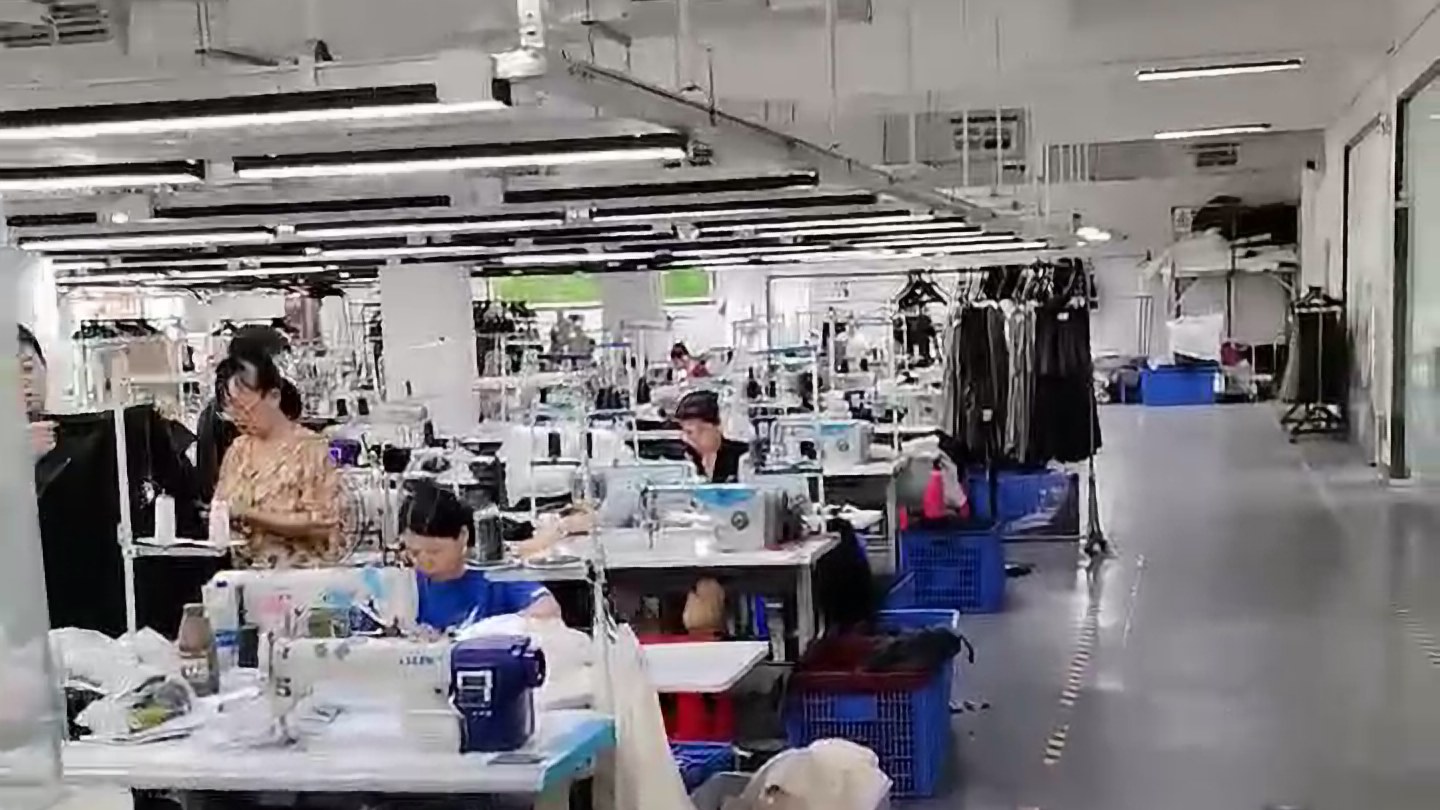
What makes small orders possible is the factory's workflow, not goodwill. A manufacturer with in-house pattern making, sample development, sewing, finishing, and packaging can absorb small runs without external minimums stacking up at each subcontractor. XinChengDa Garments supports small trial orders for start-up brands precisely because it owns the complete production chain from fabric sourcing to packing.
How to structure your first trial order
Start with one or two styles, not a full collection. Choose styles that share fabrics and construction where possible, because variety at small volume multiplies setup work. Confirm the details that drive cost at low volume: fabric choice, customization such as printing or embroidery, and private label trims like hang tags, woven labels, and care labels.
Prepare a clear input package before asking for a quotation: your design or reference sample, target fabric expectations, and honest quantity expectations. A factory can quote a realistic trial order only from real inputs. Approve the pre-production sample before bulk - at small volumes the sample is also the reference every piece is checked against.
Plan the reorder path in advance. Ask what changes at higher volumes - unit price, lead time, or minimums per color - so your first successful trial converts into a scaling decision instead of a new sourcing project.
Why first orders without a plan stall
A founder sends a design to several factories asking only for 'the MOQ'. Factories quote generic minimums because the fabric, customization, and labeling scope are undefined. The founder loops through re-quotations, unsure which number compares to which scope, and the launch date drifts. A structured trial-order request - design, fabric direction, quantities, label needs - replaces that loop with a comparable quotation and a sampling start.
Where low MOQ is the wrong tool
Low MOQ does not fit every product idea. Extremely price-sensitive basics compete at mass volume, not small batches. Highly technical performance garments may require specialized machinery and testing that small runs cannot amortize. And if your plan depends on a unit price you have only seen for bulk orders, a trial batch will disappoint - plan for the higher small-volume cost as the price of learning. For what happens between sampling and bulk, see our garment sampling process guide.
Your next step
Write your trial-order input package: one or two styles, fabric direction, expected first quantity, and the private label details you need. Send it to a factory that explicitly supports small orders, approve the sample it produces, and let real sales decide the second order. Have custom apparel demands? Contact us for a quotation and sample plan.